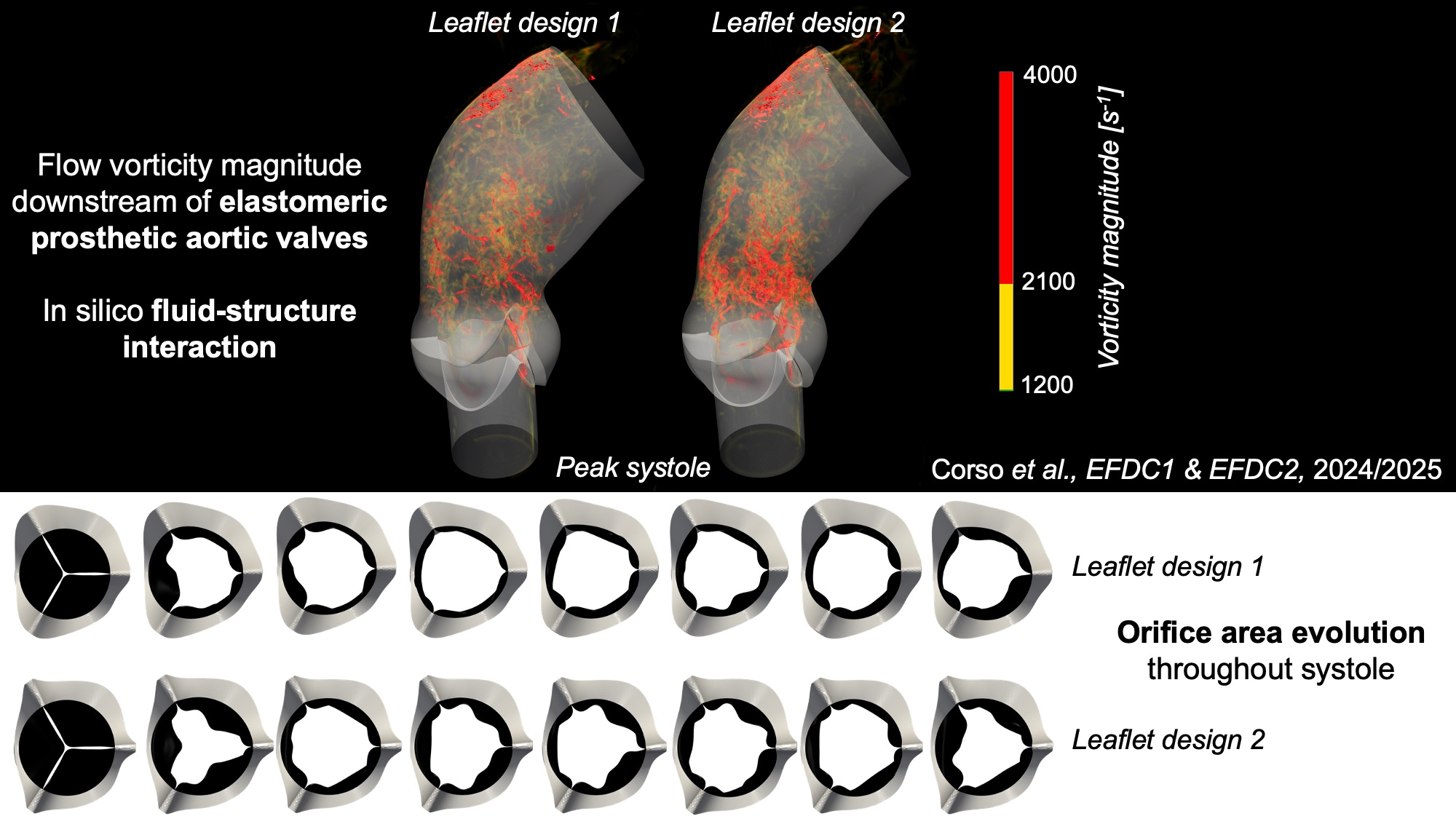
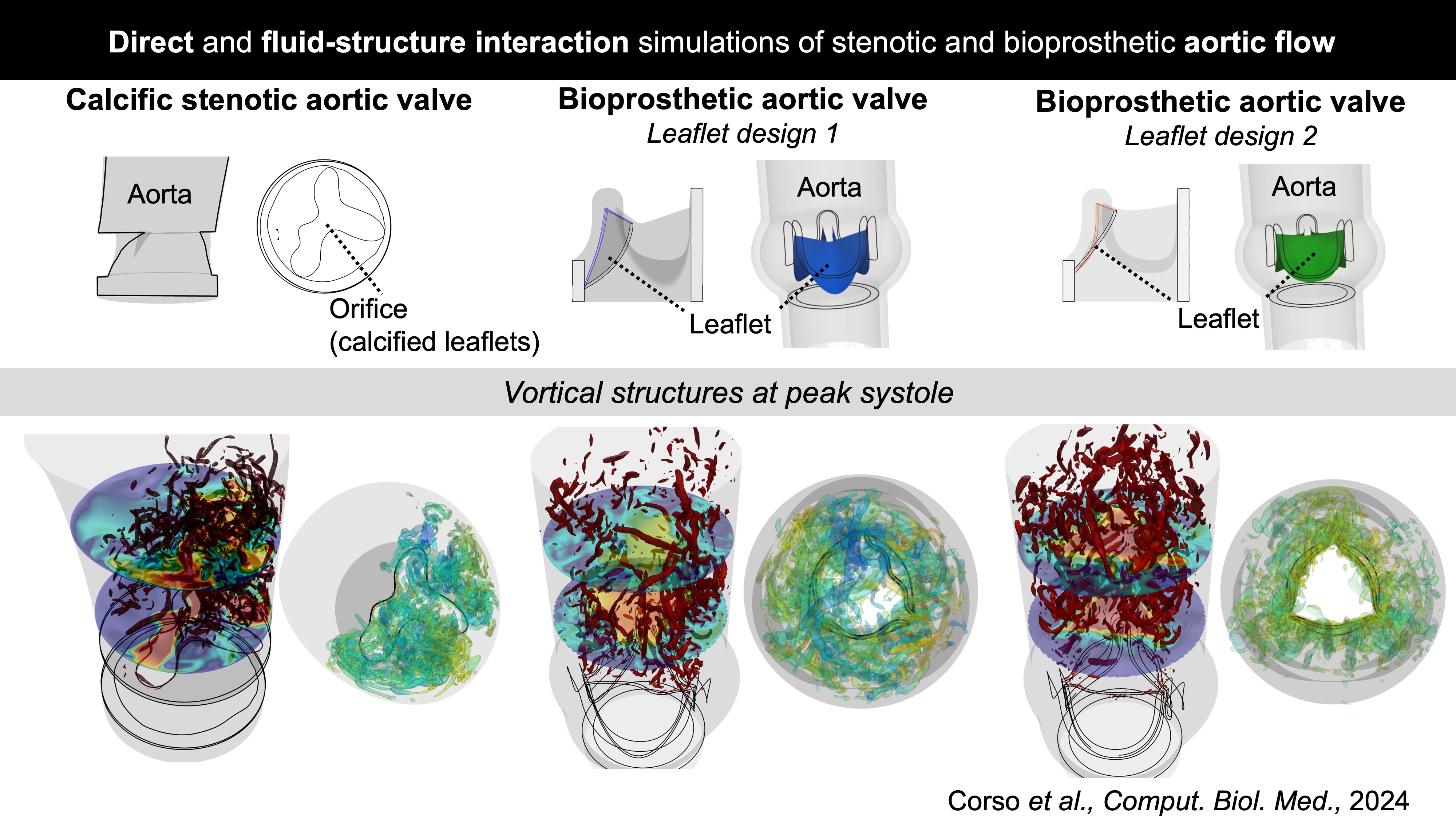
As a researcher specialised in cardiovascular biomechanics, computational and experimental fluid dynamics, I aim to advance prosthetic heart valve technology. Ten years of research into aortic flow abnormalities forms the bedrock of the methods devised to assess valve performance and refine prosthetic valve design towards greater durability and more favourable haemodynamics. My research trajectory reflects deliberate progression towards improving cardiovascular prosthesis design. Beginning with flow-diverter stents during my mechanical engineering studies at the University of Mons (2008-2013), I advanced to examining, through doctoral research, laminar-turbulent transitions downstream of stenotic and artificial aortic valves at ETH Zurich (2016-2020). As a postdoctoral researcher at the University of Bern (2020-2024), I led the computational haemodynamics sub-group and investigated the fluid-structure interaction dynamics at the root of valve calcification and flow disturbances in bioprosthetic aortic valves, with published findings covering failure modes and leaflet-design-dependent behaviour.
I am currently pursuing academic and entrepreneurial avenues for next-generation aortic valve design, drawing on experimental flow measurements and advanced computational methods. I secured over 650,000 node-hours on hybrid supercomputing nodes for this work, affording comprehensive valve performance evaluation prior to prototyping and animal testing. My recent position at the Swiss Data Science Center deepened my machine learning capabilities, now channelled into a valve optimisation platform. A parallel CAS in Entrepreneurial Leadership in Technology Ventures at ETH Zurich grounds this work in business development, product-to-market fit and commercialisation strategy. Since late 2024, as independent endeavours, I have led three concurrent projects, submitted six grant and fellowship proposals across Swiss, Belgian and European schemes, presented at five international conferences, given an invited seminar at EPFL, maintained an active publication record and reached the final interview stage for three assistant professor positions at European universities.
Serving as guest editor for a Special Issue of Biomimetics (MDPI; CiteScore 6.2, IF 4.2) titled "Bioinspired Valve Engineering and Cardiovascular Modeling".
Submission deadline: 31 October 2026. Contributions welcome.
Presenting at the 17th World Congress on Computational Mechanics (WCCM) & 10th European Congress on Computational Methods in Applied Sciences and Engineering (ECCOMAS), Munich, Germany (19-24 July 2026).
Speaker: P. Corso.
Session: MS120A "Recent Advances in Computational Methods for the Cardiovascular System I" - 20 July 2026, 11:30-13:00.
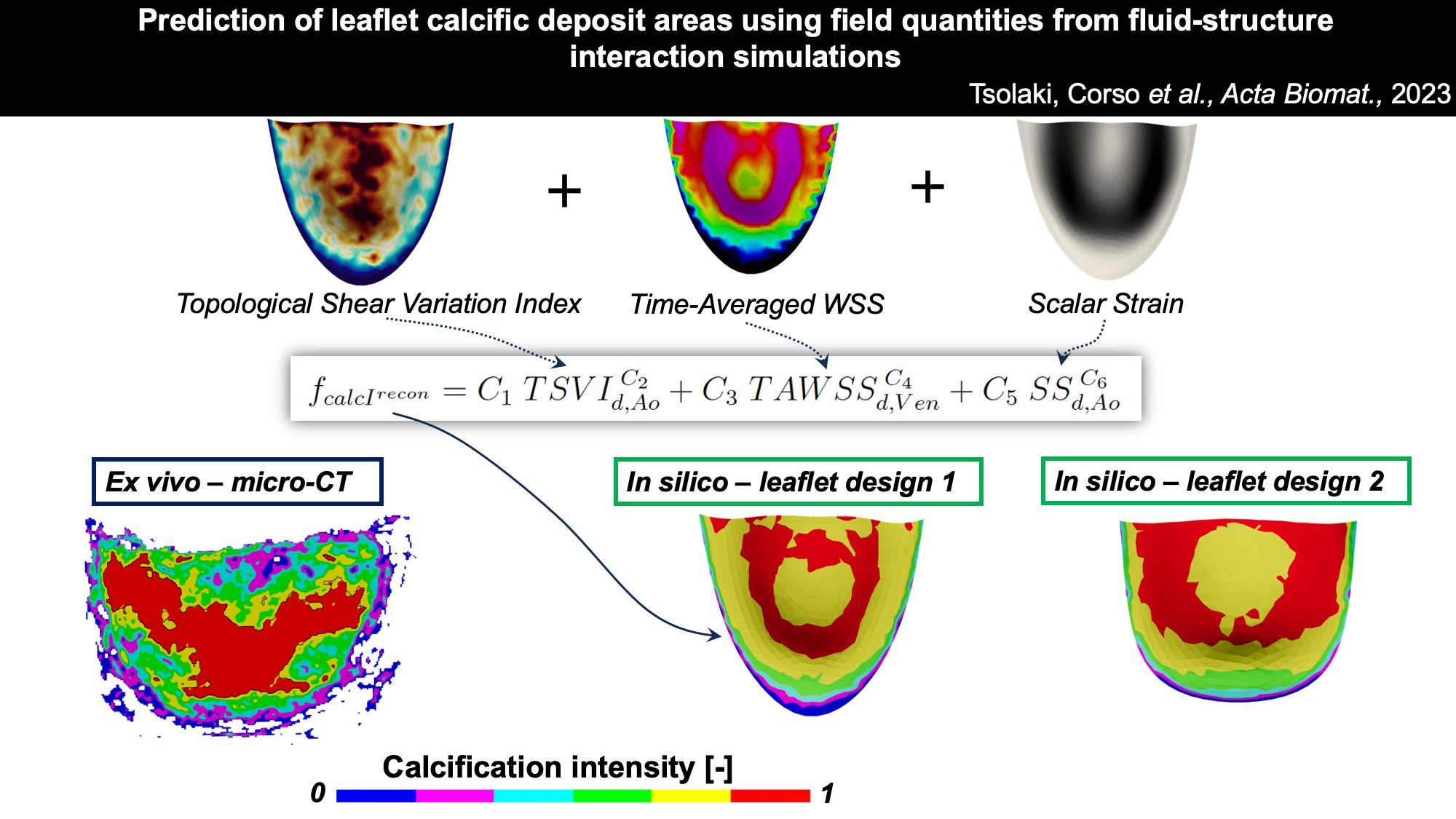
Based on: Tsolaki, Corso et al., Acta Biomaterialia 2023 (DOI) and Corso et al., Zenodo preprint 2026 (DOI).
My image entry "Zone of bloody shear" was shortlisted as a finalist in the Arts & Science Contest.
Preprint deposited on Zenodo and submitted to npj Digital Medicine: "Predicting calcification risk in prosthetic aortic valves: a hybrid physics-based and machine learning approach".
Authors: P. Corso, G. Tagliavini, M. G. C. Nestola, F. B. Coulter.
Invited speaker at EPFL - "Prosthetic aortic valve performance assessment: FSI simulations, spectral analysis and FTLE-based calcification prediction".
Organiser: Prof. S. Deparis (EPFL).
Date, time, place: 10 March 2026, 16:15, CM 1 517.
Innoviris "Brains for Brussels"
Proposal title: Automated Design And Personalised Tissue-engineered Aortic Valves.
Role: Principal Investigator.
Host: Prof. B. Haut, Université libre de Bruxelles (ULB).
Collaborative support: Dr F. Vanden Eynden, Hôpital Universitaire de Bruxelles (H.U.B.), Prof. J. Goole (ULB), Knowledge Transfer Office (KTO/ULB).
Role: Project lead
Developing DurAbleValve, a computational platform combining fluid-structure interaction simulations, Bayesian optimisation and accelerated calcification testing for prosthetic valve design. The platform optimises patient-specific valve design to simultaneously reduce calcification risk, minimise thrombogenic flow patterns and achieve physiological haemodynamics with reduced turbulent energy dissipation. The underlying FSI solver has been validated on multiple fronts: against tomographic Particle Image Velocimetry (PIV) flow fields and literature leaflet kinematics (flutter regimes and leaflet opening) and, for calcification prediction, against ex vivo micro-CT imaging of explanted calcified bovine pericardial leaflets.
Role: Project lead
Collaboration: Swiss Data Science Center, ETH Zurich
Developing deep generative models (conditional variational autoencoders, latent diffusion models) to enhance spatial resolution of biomedical imaging data. Trained on mouse brain mass spectrometry data and cardiovascular 3D particle tracking velocimetry fields, with 4D Flow MRI extension planned. Integrated into the valve optimisation platform.
Role: Project lead
Collaboration: Dr F. Coulter, ETH Zurich
Comparing 3D-printed polymeric valves (two leaflet designs) to biological counterparts through validated FSI simulations on HPC infrastructure. Unsupervised clustering of haemodynamic-derived and leaflet-strain-based metrics classifies calcification risk. Flow and leaflet motion analyses characterise pathological patterns and transitional laminar-to-turbulent structures downstream.
Tagliavini G., Holzner M., Corso P. "Modal analysis reveals imprint of snowflake shape on wake flow structures" International Journal of Multiphase Flow, 193:105365
Mokhtari A., Corso P., Jung B., et al. "Comparison of 4D flow MRI and computational fluid dynamics in carotid models with different stenosis levels" Computers in Biology and Medicine, 194:110405
Corso P., Obrist D. "On the role of aortic valve architecture for physiological hemodynamics and valve replacement. Part II: spectral analysis and anisotropy" Computers in Biology and Medicine, 176(11):108552
Corso P., Obrist D. "On the role of aortic valve architecture for physiological hemodynamics and valve replacement. Part I: flow configuration and vortex dynamics" Computers in Biology and Medicine, 176(11):108526
Jahren S.E., Demirel C., Bornemann K.M., Corso P., et al. "Altered blood flow due to larger aortic diameters in patients with transcatheter heart valve thrombosis" APL Bioengineering, 7(4):046120
Tsolaki E., Corso P. (co-first author), Zboray R. et al. "Multiscale Multimodal Investigation and Simulation of Structural Alterations in Failed Bioprosthetic Heart Valves" Acta Biomaterialia, 169(1):138-154
Krol Q., Fouxon I., Corso P., Holzner M. "Local hydraulic resistance in heterogeneous porous media" Geophysical Research Letters, 88(22):e2021GL094694
Tagliavini G., McCorquodale M., Westbrook Ch., Corso P., Krol Q., Holzner M. "Drag coefficient prediction of complex-shaped snow particles falling in air beyond the Stokes regime" International Journal of Multiphase Flow, 140(1):103652
Corso P., Walheim J., Dillinger H., et al. "Toward an accurate estimation of wall shear stress from 4D flow magnetic resonance downstream of a severe stenosis" Magnetic Resonance in Medicine, 86(3):1531-1543
Corso P., Giannakopoulos G., Gülan U., Frouzakis E.Ch., Holzner M. "A Novel Estimation Approach of Pressure Gradient and Haemodynamic Stresses as Indicators of Pathological Aortic Flow Using Subvoxel Modelling" IEEE Transactions on Biomedical Engineering, 68(3):980-991
Gülan U., Appa H., Corso P., et al. "Performance of the Transcatheter Aortic-Valve Implantation (TAVI) on Blood Flow Hemodynamics: An Optical Imaging-based In Vitro Study" Artificial Organs, 43(10):282-293
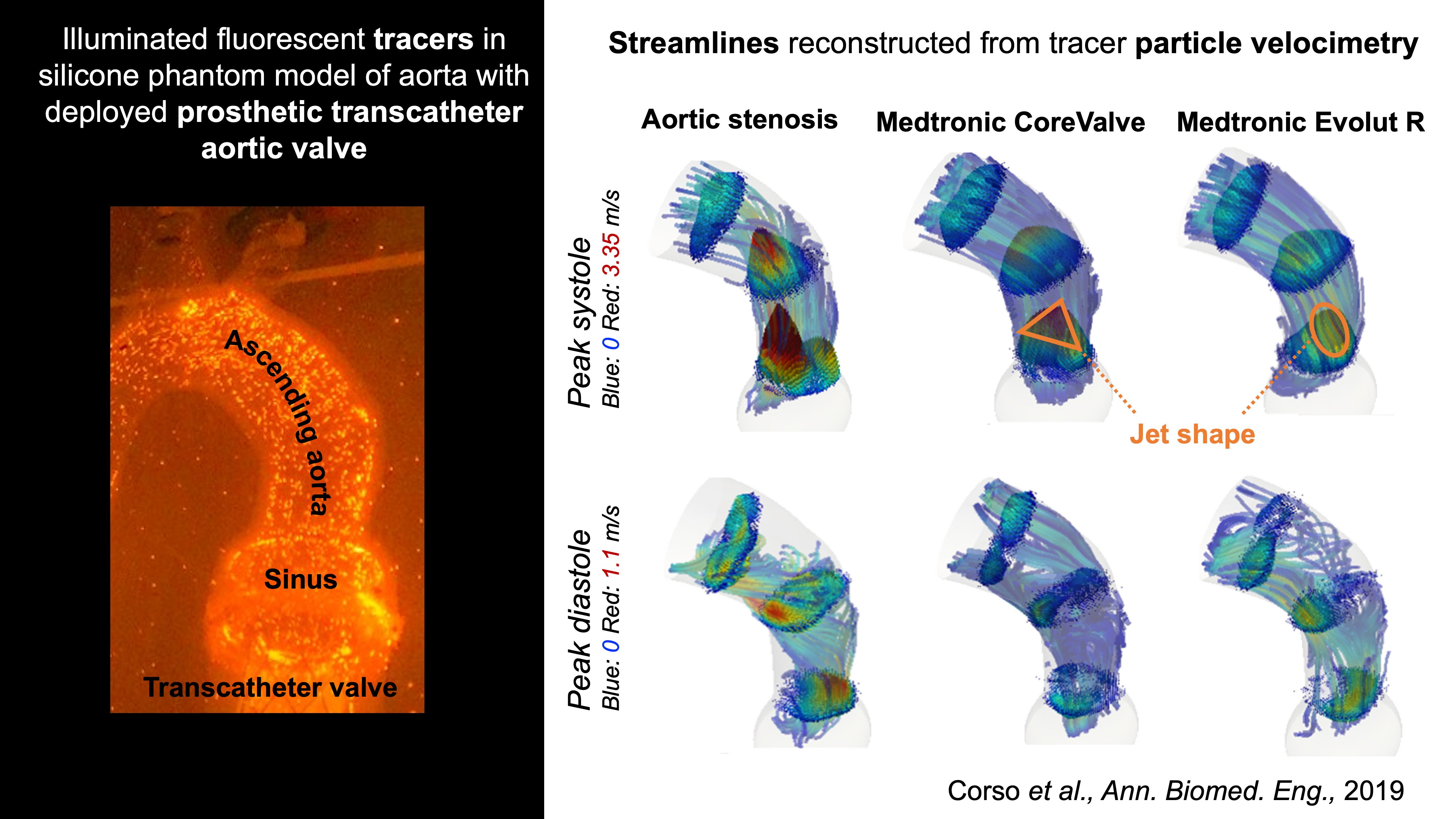
Corso P., Gülan U., Cohrs N., et al. "Comprehensive in vitro study of the flow past two transcatheter aortic valves: comparison with a severe stenotic case" Annals of Biomedical Engineering, 47(9):2241-2257
Proposal title: Automated Design and Personalised Tissue-engineered Aortic Valves.
Host: Prof. B. Haut, Université libre de Bruxelles (ULB)
Collaborative support: Dr F. Vanden Eynden (Hôpital Universitaire de Bruxelles, H.U.B.), Prof. J. Goole (ULB), Knowledge Transfer Office (KTO/ULB)
Independent research position proposal combining multiphysics simulations with data-driven optimisation of patient-specific polymeric aortic valves. Submitted twice, each time awarded the top grade "A - Excellent" yet unfunded owing to the exceptionally low success rate.
Host: Prof. B. Haut, Université libre de Bruxelles (ULB)
Status: Not granted (reserve list) | Score: 88.17/100, above the 85/100 MSCA Seal of Excellence threshold | Invited to resubmit to the second call
Postdoctoral fellowship proposal (ADAPT-AV) for the first computational framework simultaneously optimising leaflet geometry and collagen fibre architecture in tissue-engineered aortic valves through GPU-accelerated fluid-structure interaction simulations and Bayesian optimisation.
Host: Prof. B. Haut, ULB
Collaborative support: Dr F. Vanden Eynden (H.U.B.), Prof. J. Goole (ULB), Prof. U. Morbiducci (Politecnico di Torino), Dr S. Celi (Fondazione Toscana G. Monasterio)
Geometrical and material parameter optimisation of 3D-printed silicone aortic valves from computational data.
Status: Not granted (15% success rate)
Independent group leader position for MLAVOpt: data-driven platform for customised polymeric valve design and optimisation.
Host: Prof. F. Coletti, ETH Zurich
Collaborative support: ETH Zurich (Dr F. Coulter), Swiss Data Science Center (Dr E. Krymova), Politecnico di Torino (Prof. U. Morbiducci)
Status: Not granted (16% success rate)
Commercialisation pathway for 3D-printed elastomeric valve prosthesis using in vitro-in silico platform to translate calcification insights into improved durability.
Host: Prof. C. Menon, ETH Zurich
Collaborative support: Dr F. Coulter, ETH Zurich
Industry support: Hi-D Imaging AG (CEO letter)
Academic support: Ingenuity Lab Zurich (group head letter)
3D-printed aortic valves in patient-specific aorta: computational performance study.
Leaflet motion and flow characteristics of 3D-printed fibre-reinforced aortic valves.
Total funded computing resources: ~535,000 CHF equivalent | Multiple competitive proposals with excellent ratings
Advanced programme on founding and scaling deep-tech ventures: entrepreneurial strategy and team dynamics, marketing and sales, venture financing and due diligence, sustainable growth models, storytelling and personal branding, leadership development and principled negotiation for conflict handling.
Developed deep generative models for spatial resolution enhancement in biomedical imaging. Collaboration with two biology laboratories at École Polytechnique Fédérale de Lausanne (EPFL) on mouse brain lipid distribution analysis using mass spectrometry data.
Head of computational haemodynamics sub-group (2021-2023), mentoring 5 postgraduate students. Developed high-fidelity fluid-structure interaction simulations for bioprosthetic valves as digital twins of cardiovascular physics. Research focused on correlating haemodynamic and biomechanical indicators with calcification propensity, characterising transition-to-turbulence downstream of prosthetic valves through spectral and modal analysis and investigating vorticity transport mechanisms. Coordinated collaborative research with ETH Zurich, Swiss Federal Laboratories for Materials Science and Technology and Università della Svizzera italiana.
Degree: Doctor of Sciences (Dr sc. ETH Zurich) in Biomedical Flows and Engineering
Dissertation:
Computational and experimental investigation of disturbed aortic flows - novel methods to assess flow abnormalities due to severe stenoses and prosthetic aortic valvesExaminers: Prof. R. Stocker (ETH Zurich), Dr M. Holzner (ETH Zurich/Eawag/WSL), Dr Ch. E. Frouzakis (ETH Zurich), Prof. U. Morbiducci (Politecnico di Torino)
Research: Turbulent transitions downstream of stenotic and transcatheter aortic valves. Combined high-resolution computational fluid dynamics (DNS, LES) with experimental techniques (3D-PTV at 2000 fps, 4D Flow MRI, pulse duplicator systems).
Salary award: Research position funded by the Halleux-Mirland endowment, awarded to outstanding engineering Master's graduates
Project: Computational and experimental study of flow-diverter stent filtration in aortic arch applications. Applied intracranial aneurysm methods to aortic flows using Particle Image Velocimetry (PIV) measurements and CFD simulations.
Degree (magna cum laude): Master of Science in Mechanical Engineering, specialisation in energy production systems
Thesis: Intracranial aneurysm haemodynamics with flow-diverter stents using PIV measurements and COMSOL Multiphysics simulations.
Final year project: Design and study of the mechanical and hydraulic parts of a musical fountain, awarded the Caterpillar Inc. prize for creativity.
ETH Zurich
Current Location: Switzerland (Zurich)
Nationalities: Belgian & Italian
Open to: Research collaborations, consulting, speaking engagements